Better Flow across your organisation
Less friction across teams.
More focus on what matters.
Better flow of work.
Multiple teams need to work together to ACHIEVE YOUR ORGANISATION’S GOALS. but somehow, moving forward feels harder than it should.
Everyone is busy. But when work needs to move across teams, keeping the bigger picture clear isn’t always easy.
- Are teams working on the priorities that matter most?
- Are we making the progress we expected?
- Are we investing enough in activities that grow the business?
- Are dependencies between teams clear enough?
- Can we respond to new requests without constantly shifting priorities?
- Are we planning ahead, or does too much still become urgent?
Often, the issue isn’t a lack of effort. It’s creating enough clarity and alignment across teams to turn all that effort into progress.
When priorities are clear and teams work well together, there is less coordination, better focus and more room to get important work done.
What if… There is calm. There is
rhythm. and things move forward.
Everyone understands the organisation’s priorities and how their team contributes.
Teams regularly come together to align priorities, review progress and decide what matters most next.
There is transparency about what teams are working on, what they can realistically deliver and where they need each other.
Dependencies become visible early, so teams can work through them before they slow things down.
And when new priorities emerge, there is a conversation about what changes, rather than simply adding more work.
The result?
More focus. Better collaboration. More predictable delivery. And more energy going into the work that moves the business forward.

How I help bring flow into YOUR organsation
Get it clear
We start by understanding how work flows today.
Clarity
Together, we create a clear picture of how work moves across teams, where it gets stuck and where better collaboration is needed.
With leadership, we clarify the outcomes that matter most, what needs to improve and what success looks like.
This creates a shared starting point and a practical plan for moving forward together.
Get it moving
We help teams get into an effective work rhythm.
Rhythm
Through practical training and coaching, teams establish a rhythm that helps them plan, coordinate and improve their work.
Teams create transparency around their work and priorities. Asks and dependencies between teams are clearly defined and discussed early.
This creates focus, makes trade-offs visible and helps teams move work forward together.
Get it done
We keep teams aligned, learning and improving.
Alignment
Every quarter, leaders and teams come together to:
- align priorities for the next quarter
- review progress against planned outcomes
- resolve cross-team blockers
- celebrate successes & lessons learned
This keeps teams aligned as priorities change and creates a continuous rhythm of planning, working, learning and improving.
Transforming IT: More Focus, Ownership and Control
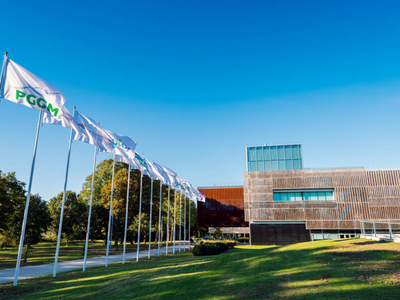
PGGM IT Centraal
Challenge:
11 IT teams were responsible for keeping critical IT services running while responding to new technological developments and increasing demands on IT.
Unplanned work regularly competed with fundamental improvements and innovation. PGGM wanted to create more focus, ownership and control while remaining attractive to scarce IT professionals.
Question:
How could PGGM IT Centraal become more in control, set clearer priorities and strengthen ownership while becoming more responsive to change?
What we did:
Over two years, I worked closely with the PGGM IT director and a team of dedicated PGGM employees and agile professionals to guide the transformation.
We started by carefully understanding the current and desired situation with leadership and employees. From there, we created a step by step approach around five goals: clearer priorities, more focus, stronger ownership, greater control and high employee satisfaction.
We first created focus and rhythm within teams. We then strengthened ownership, leadership roles and collaboration between teams. Product Owners received greater mandate, teams took responsibility for clearly defined services, and teams, Product Owners and Scrum Masters were coached in the new way of working.
Every quarter, progress was reviewed and the approach adapted based on what PGGM needed next.
Result:
Teams gained more control, focus and ownership. Priorities and responsibilities became clear. Planning and delivery became more predictable and in control.
Business involvement and employee satisfaction improved significantly. Creating a culture and way of working that felt authentic and right for PGGM.
The new way of working also attracted interest from managers and employees elsewhere within PGGM
Read the full story here (dutch):
Focus on What Counts: Turning strategy into clear priorities
Unilever Foods Benelux
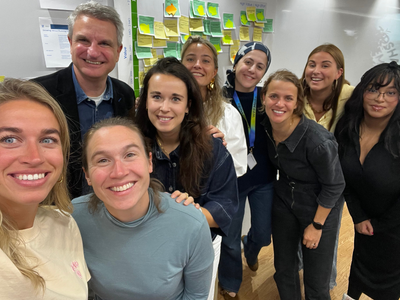
Challenge:
Eight marketing and sales teams faced high workloads and a constant flow of new requests. New work was often added rather than prioritised.
Running the business increasingly demanded attention. But future growth also required time to explore new opportunities and work on strategic priorities.
Question:
How could teams translate the annual strategy into clear quarterly priorities? Where should limited capacity go to create the greatest business impact? And what should they consciously not do?
What we did:
Together with Unilever’s Transformation Lead, I designed a quarterly focus rhythm across eight marketing and sales teams. I developed and facilitated the team workshops, Marketplace and quarterly reviews that turned the annual strategy into clear priorities and realistic plans.
At the quarterly Marketplace, I facilitated alignment between team leads and the MT. Together, they agreed priorities, dependencies and where choices had to be made.
During each quarter, we supported teams in reviewing progress and balancing running with growing the business. Each quarter ended with reflection and planning for the next cycle.
After three quarters, we transferred the approach to an internal Unilever colleague.
Result:
Priorities became clearer across Foods and within teams. Teams made more conscious choices about what to focus on. They also actively proposed stopping lower impact work.
Alignment improved. Dependencies and new requests became visible earlier. This helped teams set more realistic expectations and focus capacity on higher impact work.
Survey results supported the shift. Teams scored 4.3 out of 5 on focusing on work that really mattered. Managing ad hoc work remained an area for further improvement.
The Focus on What Counts rhythm continues today.
Read the linkedin post:
bring one organisational challenge.
What would you like to improve across your teams?
Maybe priorities are competing, dependencies are slowing things down or too much energy goes into coordination instead of progress.
Let’s get to know each other and talk about what you’d like to achieve.
In 30 minutes, we’ll explore what’s going on, what’s getting in the way and what could help you move forward.
No preparation needed. And we can talk in English, Dutch or German.
+ 31 – 6 53432423
jens.broetzmann@continno.com
‘s-Hertogenbosch, the Netherlands
Understand your situation
We look at what’s happening across your teams and what you would like to improve.
Explore options
We explore what could improve flow and collaboration.
Leave with clarity
You leave with a clearer view of your challenge and what to do next.