CHANGE THAT WORKS.
results THAT LAST.
Cases I am proud of.
Transforming IT: More Focus, Ownership and Control
PGGM IT Centraal
Challenge:
11 IT teams were responsible for keeping critical IT services running while responding to new technological developments and increasing demands on IT.
Unplanned work regularly competed with fundamental improvements and innovation. PGGM wanted to create more focus, ownership and control while remaining attractive to scarce IT professionals.
Question:
How could PGGM IT Centraal become more in control, set clearer priorities and strengthen ownership while becoming more responsive to change?
What we did:
Over two years, I worked closely with the PGGM IT director and a team of dedicated PGGM employees and agile professionals to guide the transformation.
We started by carefully understanding the current and desired situation with leadership and employees. From there, we created a step by step approach around five goals: clearer priorities, more focus, stronger ownership, greater control and high employee satisfaction.
We first created focus and rhythm within teams. We then strengthened ownership, leadership roles and collaboration between teams. Product Owners received greater mandate, teams took responsibility for clearly defined services, and teams, Product Owners and Scrum Masters were coached in the new way of working.
Every quarter, progress was reviewed and the approach adapted based on what PGGM needed next.
Result:
Teams gained more control, focus and ownership. Priorities and responsibilities became clear. Planning and delivery became more predictable and in control.
Business involvement and employee satisfaction improved significantly. Creating a culture and way of working that felt authentic and right for PGGM.
The new way of working also attracted interest from managers and employees elsewhere within PGGM
Read the full story here (dutch):
Turning AI opportunities into business value
Unilever Foods Europe
Challenge:
AI offers many possibilities. The challenge is knowing where it can make a real difference.
Alongside AI training and tooling, Unilever wanted to identify opportunities that could help people work more effectively and create more business value.
Question:
Where can AI make the biggest difference in day-to-day work and which opportunities are worth pursuing?
Unilever asked me to design and pilot a practical approach, starting with Marketing Foods.
What we did:
I helped bring together a a team of internal AI champions who interviewed around 10-15 employees.
The interviews revealed where repetitive, data-driven and coordination-heavy work was costing time and energy.
Together, the team:
- identified and prioritized a Top 10 list of AI opportunities.
- assessed impact, effort and feasibility.
- validated feasibility with business, Data & Tech.
- turned the strongest into 4–6 week experiments
- reviewed results with leadership to continue, adapt or stop.
Result:
A prioritised and validated pipeline of AI opportunities, creating focus on where AI could add most value.
A repeatable approach has been established to continuously discover, validate and develop new AI opportunities.
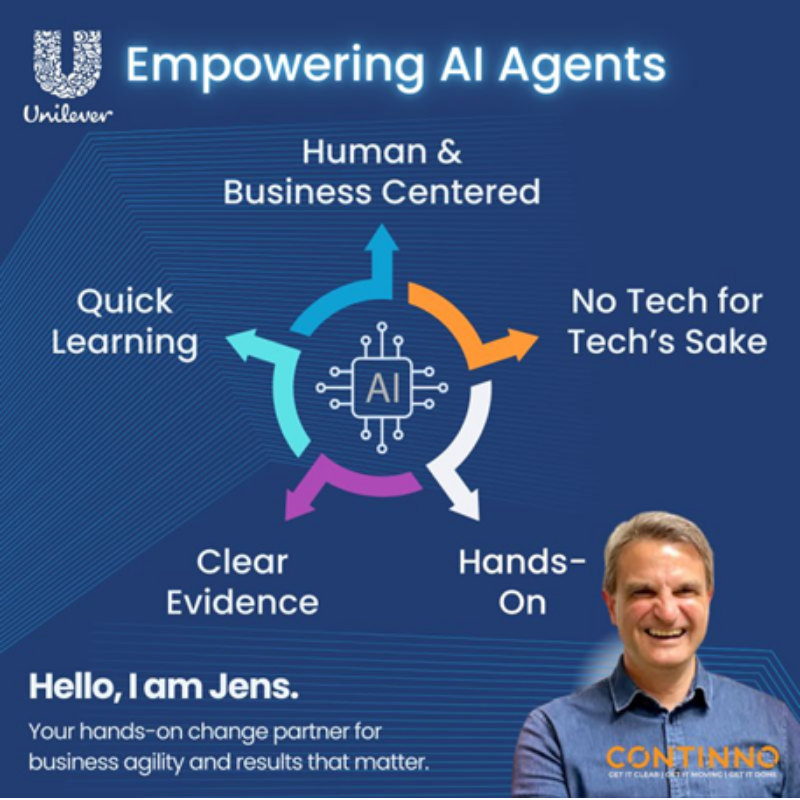
From AI possibilities to focused, evidence-based opportunities.
Read the linkedin post:
Focus on What Counts: Turning strategy into clear priorities
Unilever Foods Benelux
Challenge:
Eight marketing and sales teams faced high workloads and a constant flow of new requests. New work was often added rather than prioritised.
Running the business increasingly demanded attention. But future growth also required time to explore new opportunities and work on strategic priorities.
Question:
How could teams translate the annual strategy into clear quarterly priorities? Where should limited capacity go to create the greatest business impact? And what should they consciously not do?
What we did:
Together with Unilever’s Transformation Lead, I designed a quarterly focus rhythm across eight marketing and sales teams. I developed and facilitated the team workshops, Marketplace and quarterly reviews that turned the annual strategy into clear priorities and realistic plans.
At the quarterly Marketplace, I facilitated alignment between team leads and the MT. Together, they agreed priorities, dependencies and where choices had to be made.
During each quarter, we supported teams in reviewing progress and balancing running with growing the business. Each quarter ended with reflection and planning for the next cycle.
After three quarters, we transferred the approach to an internal Unilever colleague.
Result:
Priorities became clearer across Foods and within teams. Teams made more conscious choices about what to focus on. They also actively proposed stopping lower impact work.
Alignment improved. Dependencies and new requests became visible earlier. This helped teams set more realistic expectations and focus capacity on higher impact work.
Survey results supported the shift. Teams scored 4.3 out of 5 on focusing on work that really mattered. Managing ad hoc work remained an area for further improvement.
The Focus on What Counts rhythm continues today.
Read the linkedin post:
From Discovery to Global Delivery
Adyen IT Salesforce teams
Challenge:
Adyen was developing a Salesforce Service Cloud template for its fast growing dynamic global service organisation. The solution needed to meet the real needs of frontline employees before being rolled out internationally.
Getting the user experience right from the start was important for adoption and successful rollout.
Question:
How could Adyen design a global Service Cloud template around real user needs? And how could the team carry those insights from discovery into delivery?
What we did:
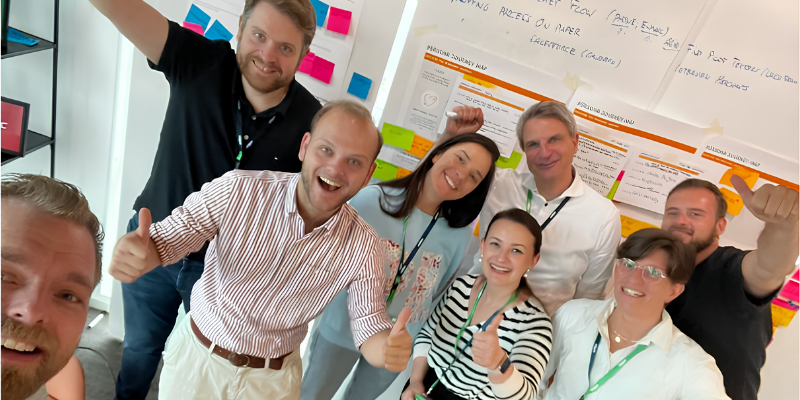
I started as Design Thinking coach and designed and facilitated the full discovery process. We interviewed and observed frontline employees, identified their biggest needs and barriers, and prioritised the opportunities with the greatest potential impact. The team turned the strongest ideas into prototypes and tested them with real users. I helped the team translate these insights into solutions that shaped the Service Cloud template.
As the programme moved into delivery, I worked together with the programme leads and coached the teams in establishing a two weekly delivery rhythm with frequent business feedback. Later, I facilitated workshops across the Salesforce IT teams to clarify dependencies and improve collaboration around what the business needed.
Result:
The first Service Cloud template was successfully delivered. It became the basis for rollout across Europe, the US, Asia and South America.
User involvement continued throughout delivery. Every two weeks, super users reviewed the latest solution and provided feedback. This allowed the team to learn and adapt as they built.
Internal IT teams gained a clearer understanding of each other’s needs and dependencies. The Scrum delivery rhythm continued after my coaching ended.
Read linkedin post:
Waste Warriors: Reducing Food Waste
Unilever
Challenge:
With food innovation, demand is not always predictable. Remaining stock could ultimately lead to food waste and unnecessary costs.
Question:
How could we reduce food waste to zero, save costs and contribute to a more sustainable world?
What we did:
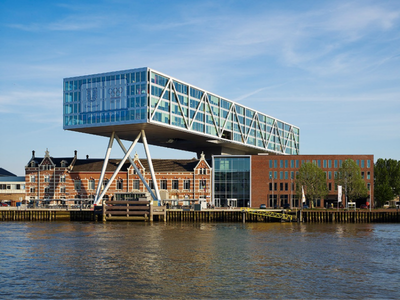
I designed and facilitated a 12 week Design Thinking & Lean Start-up approach with a cross-functional team. Together, we interviewed stakeholders to understand their needs, mapped the end to end system and uncovered the root causes.
The team developed, prioritised and tested solutions, then presented the strongest ideas to management for further implementation.
Result:
This project created the foundation for lasting change. The team identified and started validating the most promising solutions, which Unilever continued to develop and implement.
Food waste was eventually reduced to zero. The solutions are still in place today, delivering significant annual savings and better cross department coordination. Just as importantly, the initiative created real pride in contributing to a meaningful sustainability challenge.
Read linkedin post:
Let’s talk about what’s next.
You know where you want to go.
Let’s figure it out together how to get there.
+ 31 – 6 53432423
jens.broetzmann@continno.com
‘s-Hertogenbosch
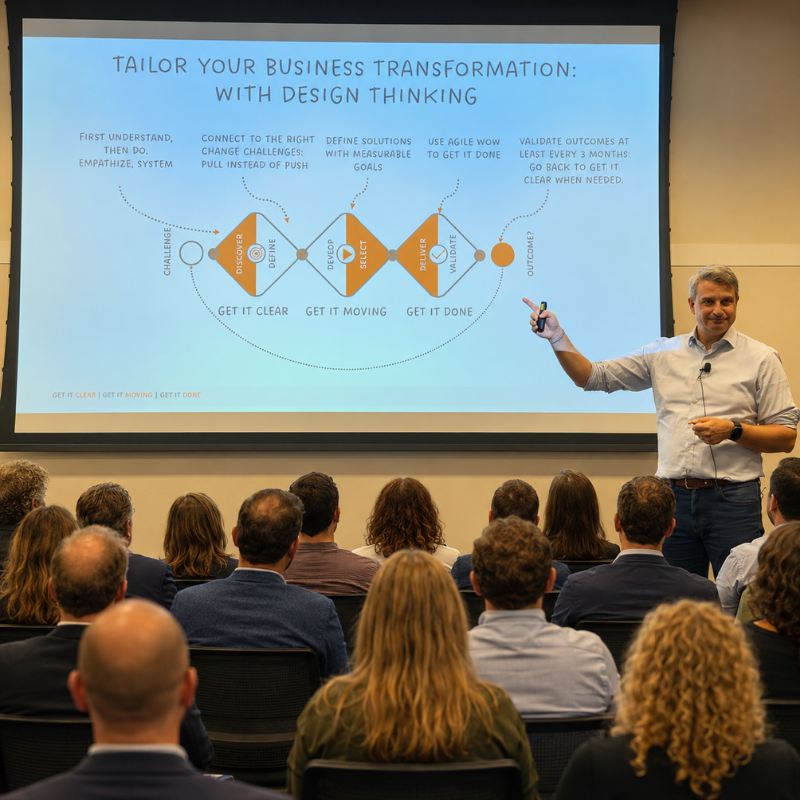
Get it clear
We discuss what’s getting in the way.
Get it moving
We explore options that could make the biggest difference.
Get it done
You leave with a practical next step.